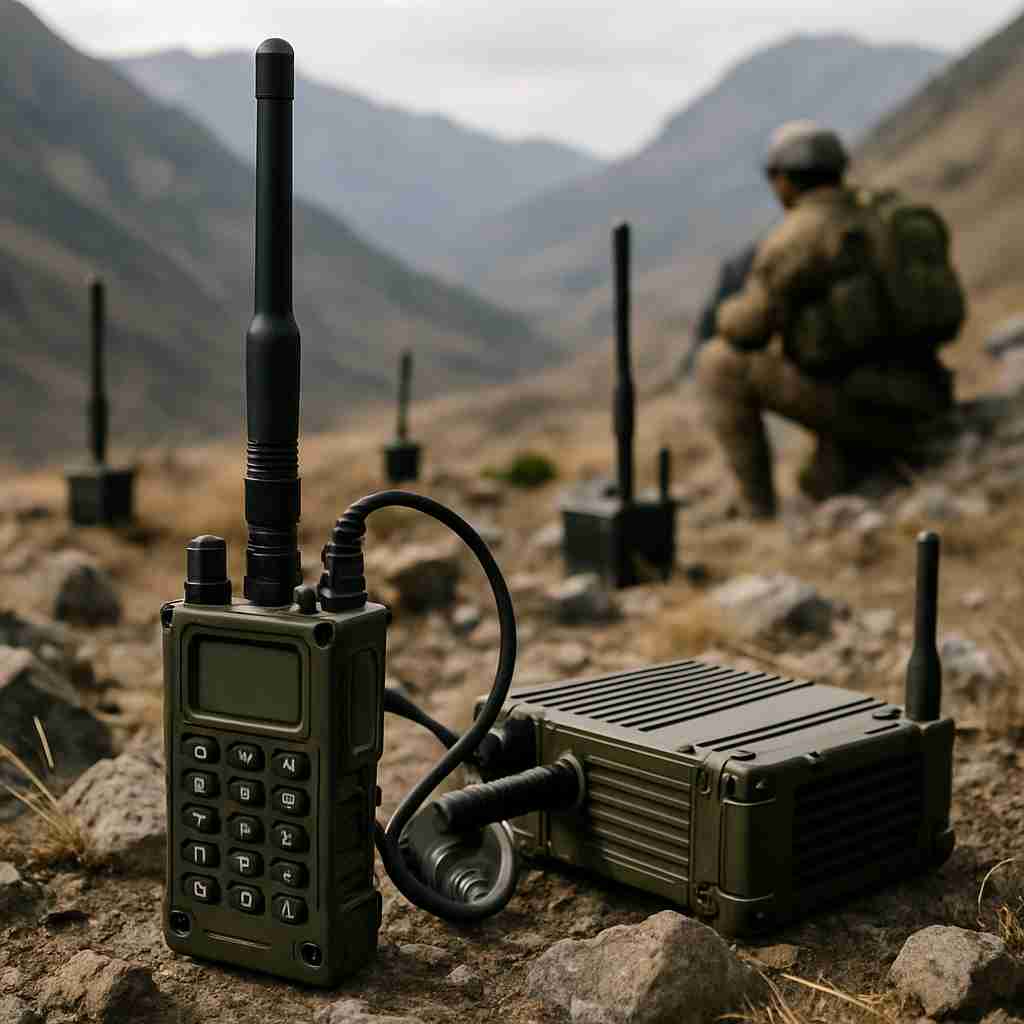

In today’s interconnected world, mesh radio devices stand out as a compelling option for independent communication equipment. Utilizing LoRaWAN mesh topology alongside military radio communication, these innovations enable communication without relying on existing infrastructure—even in the most isolated terrains. This article explores the features and advantages of mesh network solutions across a variety of mesh networking use cases.
The Fundamentals of Mesh Networking
Mesh networking changes communication at its core by creating a durable, distributed communication system through connected radio nodes. It effectively removes the need for conventional infrastructure, making it perfect for vast areas. Because of their topology, mesh networks gain flexibility as each node links with several others, so if one fails, the network stays operational via alternative routes. This redundancy significantly boosts mesh network robustness, a primary benefit that distinguishes mesh communication systems.
Another advantage is scalability. When more nodes join, network coverage naturally grows, which is especially useful in complicated settings like city environments or extensive agricultural regions. Initially, the ideas behind mesh networking appeared in military scenarios where strong communication was essential under challenging conditions. Currently, the technology has broadened to civilian contexts, enabling applications ranging from urgent response communication to improving rural internet access options.
When stacked against traditional frameworks such as star or point-to-point models, it offers a better method to maintain links without central nodes vulnerable to failure. The distributed nature gives a tactical edge, whether in combat radio communication or maintaining connections during natural disasters. Across both defense and civilian sectors, mesh radio devices are unlocking new avenues for autonomous connectivity, signaling a major advancement toward more robust communication systems.
Deciphering LoRa Mesh Networks
LoRa mesh networks mark a significant advancement in communication technology, delivering enhanced, low-energy, long-distance capabilities that are perfect for distributed communication infrastructures. Utilizing distinctive modulation methods such as Chirp Spread Spectrum technology, LoRa stands out by preserving strong, interference-resistant signals over extensive ranges, proving highly effective in both metropolitan and isolated environments. Its capability to cover several kilometers across open terrain guarantees efficient transmission of data even without standard infrastructure.
LoRa’s strong compatibility with IoT devices encourages smooth integration within smart urban developments and sophisticated sensor networks. Present-day LoRa mesh network benefits show the technology’s impact on connectivity by offering solutions that require no infrastructure, combining scalability with resilience. Urban centers employ LoRa to connect numerous sensors and gadgets, significantly improving traffic systems, environmental surveillance, and public safety initiatives. Conversely, its expansive reach and low power demands facilitate effortless remote monitoring and control in peripheral areas.
Looking ahead, LoRa’s future involves widening its range of applications, from scaling smart city projects to enhancing logistics and farming operations. This adaptability and robustness position LoRa networks as a groundbreaking element in contemporary connectivity. As LoRa expands into diverse sectors, it paves the way for a future where communication transcends limitations, even when conventional infrastructure is absent.
Tactical Mesh Radios in Military and Emergency Use
When traditional networks break down in military and emergency situations, mesh radio devices become essential for maintaining communication. Designed to be highly durable, these units feature strong encryption to protect communications and uphold privacy. Their lightweight design enables quick setup in fluid environments, including disaster zones or evolving military missions.
The deployment of tactical mesh radios has revolutionized vital missions. During natural calamities, these radios allow first responders to organize rescue activities even when the existing infrastructure is nonfunctional. By establishing a flexible network, they facilitate continuous voice and data exchange throughout impacted regions, filling voids left by damaged systems.
In defense contexts, mesh radio devices keep units linked, even in isolated areas. Through the creation of autonomous, self-healing mesh networks, they adjust to movements and barriers, ensuring stable connectivity and cohesive operations. For example, in covert operations where discretion is key, their encrypted communication networks provide secure transmissions without relying on traditional infrastructure. This is crucial for informed decision-making and executing intricate plans under demanding circumstances. Both military personnel and emergency responders depend on these tools to sustain their efforts and communicate efficiently without the limitations of existing networks.
Infrastructure-Free Communication Solutions
In regions where traditional connectivity is obstructed by natural terrain or human limitations, infrastructure-free communication solutions truly excel. Essential in zones lacking cellular towers or facing damaged networks, these technologies—including satellite links and mesh radio devices—are critical for providing remote area network infrastructure. When disasters strike and established networks fail, such systems become a vital lifeline for humanitarian efforts.
Their significance also reaches scientific endeavors, allowing data exchanges in remote or extreme environments where conventional infrastructure is impractical. For those working remotely, self-sufficient communication platforms ensure smooth connectivity, enabling everyday tasks regardless of geographic location.
Nevertheless, challenges like limited bandwidth, latency complications, and the steep expense of satellite services affect these systems. Ongoing innovations aim to address these obstacles, with new satellite constellations designed to cut latency and enhanced mesh radio devices engineered to boost mesh network dependability and extend coverage. As these technologies progress, they will keep expanding connectivity to the planet’s most isolated locations, ensuring no area remains disconnected.
Practical Applications and Future of Mesh Networking Solutions
Mesh network solutions are revolutionizing multiple industries by offering innovative connectivity options where conventional setups might struggle. In the telecommunications field, they boost the dependability and coverage of networks by facilitating communication within mesh radio devices through distributed communication systems. These autonomous communication systems play a vital role in supporting smart vehicle communication systems and drones, guaranteeing their link remains intact in regions without typical infrastructure. The rise of artificial intelligence-driven mesh networks holds great promise for enhanced network management, enabling real-time tuning based on traffic patterns, lowering latency, and elevating overall performance.
As we progress into an age where uninterrupted network access is crucial for essential infrastructure, the significance of mesh networks becomes increasingly clear. They serve as sturdy platforms capable of sustaining emergency management communication solutions, remote sensing, and industrial wireless mesh networking systems without depending on grid-based frameworks. Specialists foresee a future in which these technologies will grow indispensable in smart city mesh connectivity systems, providing strong resistance against network interruptions. The fusion of AI and ongoing advancements in mesh radio devices will make these networks key partners in addressing the communication requirements of tomorrow.
Conclusions
By utilizing radio devices such as LoRa and tactical radio communication, mesh networking technologies create a durable communication framework that operates independently from traditional infrastructure. Their adaptability and robustness prove essential for applications involving independent communication equipment, military operations, and cutting-edge civilian uses. As we advance toward greater global connectivity, these mesh network solutions will unquestionably be pivotal in closing communication divides across the world.