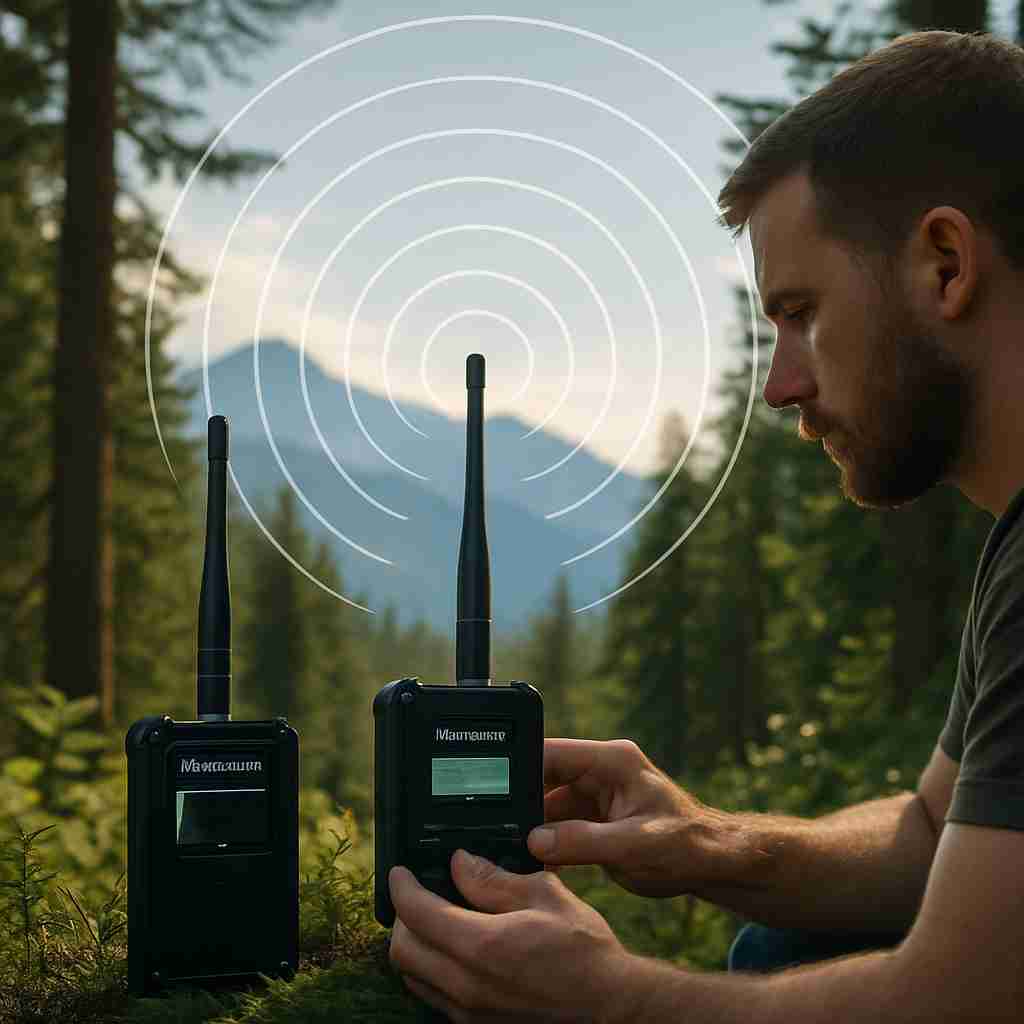

Discover how to expand Meshtastic network coverage for communication across vast distances utilizing LoRa technology. This guide explores the range potential of Meshtastic, options for Meshtastic antenna performance tuning, LoRa module choice, and actionable recommendations to effectively enhance Meshtastic network distance.
Understanding Meshtastic and LoRa Technology
Meshtastic relies on LoRa technology to build reliable, extended reach LoRa communication networks that operate independently of cellular infrastructure. The secret behind this lies in LoRa’s chirp spread spectrum modulation, which plays a crucial role in lengthening communication distances within meshed systems. By spreading signals across a broad frequency band, LoRa makes them highly resistant to interference, an essential trait for transmissions covering multiple kilometers. Thanks to this, Meshtastic devices equipped with this technology can cover impressive distances, often spanning large rural or urban regions where conventional cellular service is unavailable.
The power of LoRa within Meshtastic networks stems from its capacity to balance bandwidth and energy use, optimizing for low consumption while ensuring long-distance LoRa connectivity. Its flexibility across diverse environmental conditions guarantees dependable communication, no matter the terrain or weather challenges faced. This makes Meshtastic range LoRa perfectly suited for uses such as outdoor adventures or remote workplaces, where infrastructure is scarce but continuous long-range wireless data transfer is critical.
Leveraging the advantages of LoRa, Meshtastic enables users to create durable mesh networks. Gaining insight into these fundamentals helps enhance network efficiency and provides the groundwork for tailoring and deploying networks adaptable to various environments. With Meshtastic range LoRa, the limits of communication are pushed further, opening the door to innovative applications across different terrains and industries.
Meshtastic Range Capabilities
Devices like the TTGO T-Beam from Meshtastic have gained a reputation for their remarkable range abilities. While these units often manage communication across multiple kilometers, the real distance covered varies based on several elements. The environment significantly impacts signal reach; clear open terrain can greatly extend connectivity compared to dense urban landscapes or thick forests, where many barriers obstruct signals. Additionally, the frequencies these devices operate on affect how well they perform. Lower frequency bands penetrate obstacles more effectively, whereas higher frequency channels provide greater bandwidth but at the cost of reduced range.
Configurations of the device, such as power output and antenna positioning, are equally important. For example, equipping a high-gain antenna can substantially expand the communication radius. Real-life usage underlines how vital these considerations are. Users in rural open spaces have reported distances beyond 10 km, whereas city environments cluttered with obstructions might only reach 1-2 km. By grasping these factors, users can tactically position their Meshtastic units. Selecting unobstructed locations and fine-tuning settings can vastly enhance reliability and effectiveness, ensuring your Meshtastic range LoRa network operates at peak performance regardless of environmental hurdles. This insight is essential for unlocking the full capabilities of Meshtastic range LoRa networks.
Antenna Recommendations for Meshtastic Devices
Selecting the appropriate antenna plays a vital role in maximizing the communication range of Meshtastic devices. Your network’s signal strength and coverage are directly influenced by the antenna you choose. Omni-directional antennas are frequently suggested due to their capacity to emit signals evenly in every direction, which suits open areas where wide coverage is essential. On the other hand, directional antennas concentrate the signal toward a specific path, offering increased range and more robust signals in designated spots—making them perfect for long-distance LoRa transmission needs.
When choosing an antenna, ensure the frequency bands align with your requirements for compatibility. The antenna’s gain, indicated in decibels (dBi), represents how powerful the signal it can send or receive is. While higher gain often enhances range, it typically narrows the broadcast pattern, which might not be suitable for every situation.
Installation quality is critical for optimal results. Position antennas high up and clear from barriers like large metal structures or thick walls to reduce interference. Matching your antenna selection and installation methods to the environment can greatly improve your Meshtastic range LoRa device’s communication distance and reliability.
Choosing the Best LoRa Modules for Meshtastic
Selecting the ideal LoRa modules plays a critical role when aiming to enhance a Meshtastic network’s performance and dependability. To make well-informed decisions, it’s important to evaluate aspects such as power usage, frequency bands, and overall compatibility with Meshtastic software. For battery-operated gadgets, opting for energy-efficient LoRa modules is vital as it prolongs operation time without the need for frequent recharging.
The frequency band represents another crucial factor, given that Meshtastic devices are developed for specific bands depending on geographic location—verifying compatibility helps maximize your network’s effectiveness. Among the popular choices are modules like the HopeRF RFM95, valued for its affordability and straightforward integration, and the Semtech SX1276, which is recognized for its strong performance and wider frequency coverage.
Ensuring compatibility with Meshtastic range LoRa software is essential for smooth network operation. Proper integration supports efficient data processing and synchronization, directly impacting communication quality. By concentrating on these key points, your Meshtastic network will achieve the desired reliability and coverage, enabling deployment even in difficult terrains. Make your selection carefully, and your network will deliver sturdy and consistent connectivity.
Strategies to Increase Meshtastic Range
To expand Meshtastic network coverage, careful planning and fine-tuning are essential. Enhancements in configuration can greatly elevate overall performance. Begin by integrating high-performance antennas for Meshtastic devices with your Meshtastic nodes to amplify the signals. Placing nodes correctly is vital; situate them at higher elevations to minimize interference and maximize line-of-sight communication, a factor that is key when aiming to broaden network distance, especially across rugged or uneven landscapes.
Environmental conditions significantly impact network efficiency as well. Terrain obstacles such as thick forests or mountainous areas can hinder signals in any LoRa mesh network infrastructure. Thoughtful node deployment that considers these barriers will improve coverage and operational effectiveness. Employing mesh network range extenders is an effective method to bridge wide gaps and sustain strong communication links.
Tuning your software parameters offers yet another avenue for boosting network capabilities. By modifying the bandwidth and spreading factor settings of your LoRa setup, you can enhance both signal reach and consistency. Experimentation with these parameters helps uncover the best combination for enhancing LoRa transmission distance.
Regularly updating firmware and monitoring the health of your nodes are key aspects of maintaining optimal network function. Applying these techniques enables you to push your Meshtastic range LoRa network to its fullest capacity, delivering robust and dependable performance in demanding scenarios.
Conclusions
By utilizing the correct equipment and settings, understanding and optimizing Meshtastic can greatly
enhance network reliability and coverage. Users who choose suitable antennas and perform careful LoRa module choice, combined with effective practical methods, can enjoy extended distance LoRa transmission perfect for a variety of use cases. This strategy positions Meshtastic as a flexible solution for dependable independent communication systems.

