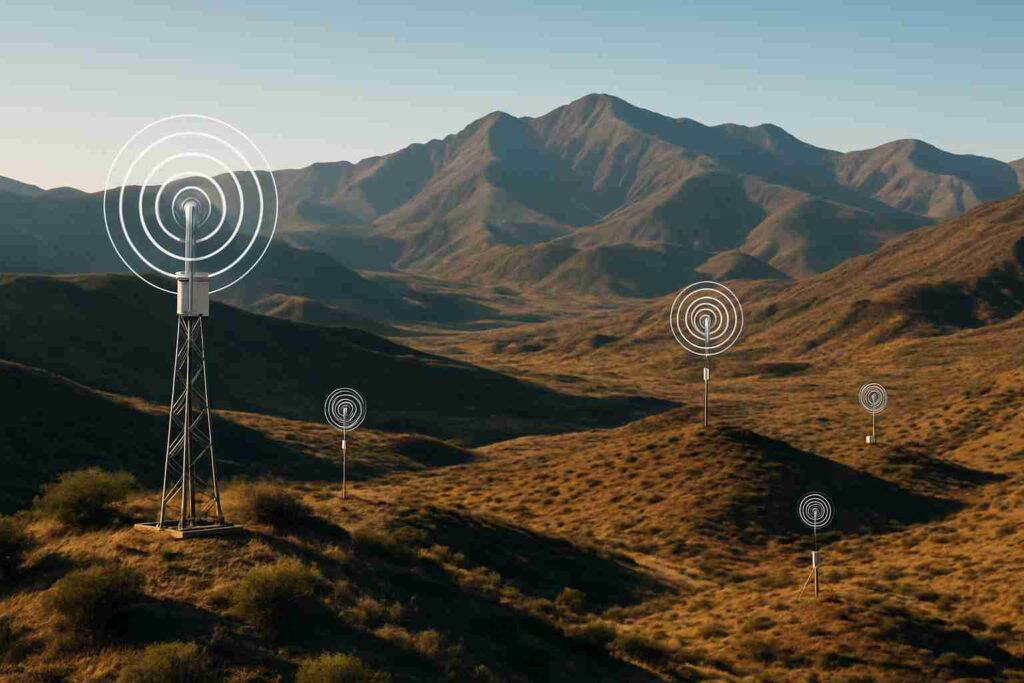

In a society that increasingly depends on connectivity, LoRa mesh networks are becoming essential components for autonomous communication solutions. Utilizing technologies such as Meshtastic and MeshCore, these distributed mesh network architectures employ the LoRaWAN mesh topology to facilitate far-reaching IoT communication with minimal energy usage. This article delves into the operational aspects of these networks and their game-changing impact.
What is a LoRa Mesh Network?
A LoRa mesh network marks a breakthrough in communication technologies, particularly essential for remote connectivity solutions. Instead of relying on elaborate infrastructures like traditional systems, it utilizes the advantages of energy-efficient wide-area networks. This system enables devices to transmit data over vast expanses using very low power—an indispensable feature where energy resources are limited. By supporting long-haul wireless networking, a LoRa mesh network links numerous devices, including environmental sensors and logistical trackers.
These networks, based on distributed mesh networking, maintain strong communication signals across challenging terrains or in crisis recovery communication platforms. Messages are relayed between devices to extend the network’s reach well beyond single-hop transmissions. The multi-relay wireless networks capability of LoRa mesh networks improves coverage and enhances mesh network dependability by minimizing potential failures. Such resilience and flexibility make LoRa mesh a foundational technology for dependable communication in isolated regions where standard methods often fail.
Off-Grid Communication and Its Challenges
In areas far from urban infrastructure, maintaining communication proves difficult due to the lack of dependable systems. Conventional networks frequently fail in these remote regions, resulting in unreliable connectivity. This gap is effectively addressed by LoRa mesh networks, which provide a practical alternative. Their energy-efficient long-range capabilities excel where other networks falter. Without requiring expensive installations in rugged landscapes such as mountains, dense woodlands, or vast deserts, they ensure smooth connections.
When calamities occur and standard systems collapse, these networks exhibit remarkable durability. By creating a distributed mesh network, they enable nodes to communicate directly, bypassing impaired infrastructure. Such flexibility guarantees that essential communication lines stay operational, serving as a lifeline during emergencies.
Additionally, the straightforward and economical nature of LoRa technology makes it perfect for standalone communication platforms. Thanks to strong security measures and low energy consumption, these networks can function independently of the main grid, utilizing renewable energy powered networks when needed. This capability makes them invaluable for sustaining communication in difficult settings, effectively bridging the digital gap where traditional methods fail. Leveraging LoRa mesh networks allows isolated and disaster-affected zones to sustain communication, boosting both safety and connectivity.
Decentralized Mesh Networks Explained
Decentralized mesh networks, like LoRa mesh networks, transform connectivity by emphasizing peer-based communication. Unlike conventional networks that depend on centralized hubs, these frameworks function autonomously, improving both security and dependability. Every node communicates directly with adjacent nodes, creating a durable web of links. This configuration minimizes the risk of a single point of failure, guaranteeing strong communication even if one node stops working.
The distributed nature removes reliance on central power sources, offering a significant advantage for standalone communication solutions. Nodes may be powered by batteries or draw energy from sustainable sources, thereby prolonging operational duration and sustaining connectivity in distant regions. Additionally, this design liberates users from telecom infrastructure or internet reliance, which is critical during disaster management communication solutions when traditional networks could fail.
Security also benefits from decentralization. Data transfers across multiple routes, making interception considerably harder. In environments where confidentiality is crucial, direct node-to-node communication without routing through central servers adds an extra shield of data security. Networks built on MeshCore technology exemplify how this model empowers communities by delivering dependable, secure, and autonomous connectivity services.
The Role of Meshtastic and MeshCore in Communication
Meshtastic and MeshCore showcase the promise of LoRa mesh networks within decentralized communication systems. Crafted to support extended-range energy-efficient communication, these platforms eliminate reliance on conventional infrastructure, proving resilient in remote connectivity solutions. While Meshtastic caters to outdoor enthusiasts and emergency responders, delivering an intuitive platform tailored for hikers and rescue personnel, its emphasis lies on ease of use and prolonged battery endurance—key for operations in the field where resources are scarce.
Conversely, MeshCore targets wider applications, providing sturdy solutions for rural network access and industry-focused scenarios. Engineered for scalability, it effortlessly integrates with diverse IoT devices to amplify network reach. This versatility makes it well-suited for both intimate community networks and vast industrial ecosystems.
Both systems prosper through the principles of peer-to-peer mesh networking, removing any single failure points. Regarding use cases, Meshtastic fits individuals or teams requiring transient, mobile connectivity, whereas MeshCore delivers a more scalable strategy for long-term operations. This distinction underscores the flexibility of LoRa mesh networks, solidifying their importance as essential tools in closing communication divides.
LoRaWAN: Bridging Gaps in Connectivity
LoRaWAN effectively bridges connectivity voids by integrating smoothly with LoRa mesh networks, broadening communication possibilities especially in isolated location connectivity scenarios. As an energy-efficient wide area network protocol, LoRaWAN enables wide-area IoT communication with low energy use, making it indispensable for Internet of Things deployments in regions where traditional connectivity is challenging. By boosting range and conserving power, LoRaWAN solutions are perfectly tailored for IoT applications, unlocking fresh opportunities in smart city Internet of Things systems, environmental monitoring, and precision agriculture technology within developing markets.
Operating on unlicensed radio frequencies, LoRaWAN supports expansive IoT networks without requiring costly infrastructure investments. This characteristic suits it well for linking devices distributed over large geographic expanses or scattered rural populations. Within these environments, the protocol ensures dependable data flow, surpassing natural and infrastructural hurdles that often obstruct conventional networks.
Its transformative role in IoT facilitates device communication across considerable distances with minimal power consumption. This breakthrough is fundamental to advancements in resource management and site-specific crop management technology, vital for markets aiming to enhance productivity and efficiency. Leveraging LoRaWAN, an integrated LoRa mesh network acts as a key driver for connectivity, promoting digital inclusion and sustainable growth in underserved area networking.
Conclusions
LoRa mesh networks, supported by innovations such as Meshtastic, MeshCore, and LoRaWAN, offer a groundbreaking communication approach for off-grid environments. Utilizing distributed mesh network architecture, these systems provide reliable, energy-efficient wide-area networks perfect for isolated locations and difficult landscapes. Adopting these cutting-edge technologies can close connectivity divides, promoting both accessibility and technological progress.