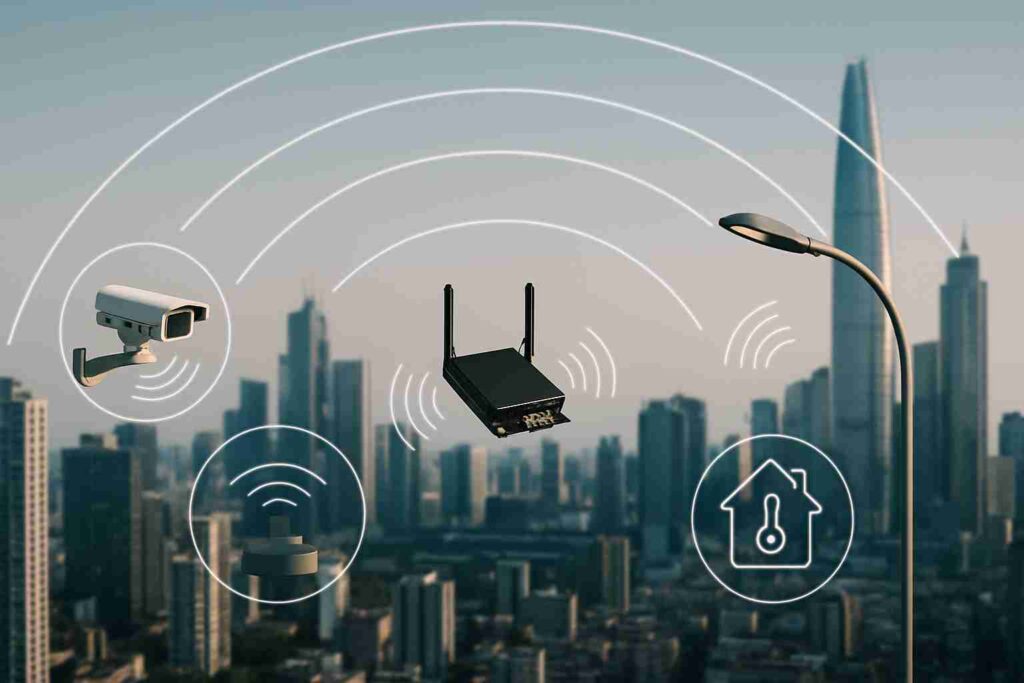

LoRa radios are transforming extended distance wireless communication for IoT devices by facilitating energy-efficient IoT connectivity through low energy wide area network systems. In this discussion, we delve into how the LoRaWAN connectivity platform and related innovations are reshaping smart device connectivity systems, simplifying the management of massive IoT network deployment over large distances with increased efficiency.
The Basics of LoRa Technology
LoRa technology marks a significant breakthrough in wireless communication, especially fitting for the Internet of Things (IoT) ecosystem. Essentially, LoRa—short for Long Range—is a modulation method that allows extended distance wireless communication while consuming very little power. This quality makes it perfect for IoT implementations where battery performance in IoT hardware and coverage are vital. Unlike wireless standards such as Wi-Fi or Bluetooth that prioritize high transmission speeds over short ranges, LoRa shines by supporting a low data rate across distances from a few kilometers in metropolitan areas to beyond 15 kilometers in rural zones.
The core concept of LoRa lies in spreading the signal across a broad frequency spectrum, which not only stretches its reach but also enhances its resistance to disruption. Thanks to this feature, LoRa radios can link devices scattered over extensive geographical regions—be it in isolated rural landscapes, crowded cityscapes, or tough terrain.
Practical LoRa network applications cover a broad range, particularly in environments where connectivity and energy-saving IoT systems are challenging. From precision farming systems that track soil health, to smart urban IoT technologies like intelligent street lighting, to logistics involving asset monitoring, LoRa radios enable cutting-edge solutions, revolutionizing industry operations across vast areas.
Understanding Low-Power Wide-Area Networks (LPWAN)
In the field of Internet of Things (IoT) communication, Low Power Wide Area Network technology (LPWAN) is revolutionizing how devices transmit data. These extensive area network infrastructures enable gadgets to send information over vast distances while maintaining very low power consumption. This feature is crucial for IoT, especially when devices function in isolated areas or demand extended battery performance. Not only does energy efficiency extend the power endurance of IoT devices, but it also lowers upkeep expenses and lessens environmental harm.
When stacked against other networking methods such as cellular, Wi-Fi, and Bluetooth, LPWAN technology stands out because of its exceptional coverage and minimal energy requirements. Cellular systems might deliver fast data rates, yet they rapidly exhaust device batteries. Wi-Fi and Bluetooth, though common, suffer from restricted range and can also consume considerable power. Technologies like LoRa radios offer connectivity across multiple kilometers while drawing power comparable to a wristwatch battery.
This power-saving IoT communication supports the growth of IoT by linking sensors and gadgets across smart cities, agricultural regions, and remote natural reserves without frequent battery replacements. Ultimately, LPWANs, particularly with the utilization of LoRa radios, broaden the horizons of IoT by merging far-reaching connectivity with intelligent energy use.
Exploring the LoRaWAN Protocol
The LoRa radios owe much of their success and operational efficiency to the LoRaWAN communication system. By establishing an all-encompassing platform that links IoT devices with cloud-based services, LoRaWAN delivers a sturdy framework for extended distance wireless communication while consuming minimal energy. It operates on a “star-of-stars” configuration, where individual end nodes—such as sensors or meters—interact with LoRaWAN base stations. These base stations serve as intermediaries, forwarding device data to a centralized network server via IP connections. The central server orchestrates data flow, guaranteeing scalable and effective communication.
Across sectors from intelligent farming solutions to smart urban IoT technologies, LoRaWAN cybersecurity ensures data privacy and protection with robust encryption measures. Supporting enterprise-wide IoT implementation, it can effortlessly integrate thousands of devices into a single network. Its design is tailored for low-powered devices, making it ideal for long-term outdoor deployments without frequent battery replacements.
By seamlessly integrating with LoRa radios, the LoRaWAN connectivity platform remains a pivotal component of modern Internet of Things infrastructures, enabling strategic, energy-efficient IoT connectivity across diverse environments.
Benefits and Challenges of LoRa and LoRaWAN
Leveraging LoRa radios alongside the LoRaWAN communication system offers a strong proposition for contemporary IoT communication platforms, especially due to their extended distance wireless communication and cost efficiency. LoRa technology enables devices to interact over multiple kilometers, making it perfect for remote and rural locations. Achieving this range with very low energy IoT networking means that battery-operated IoT gadgets can function for years without needing battery replacements, which results in notable cost reductions. In addition, the straightforward nature of LoRa technology reduces upfront infrastructure expenses, making it an attractive choice for broad IoT system integration.
Nonetheless, progressing these technologies brings certain obstacles. Citywide network interference management can frequently surface due to LoRa’s operation within unlicensed spectrum bands, potentially causing congestion particularly in metropolitan environments. Security is another critical aspect, as communications involving sensitive information require robust safeguards against breaches. Ongoing technological advancements are tackling these problems by adopting advanced encryption techniques and creating spectrum management strategies to minimize interference.
The compromise between data throughput and coverage demands careful consideration. While LoRa shines in extended range IoT connectivity, it does so at the expense of data speed, making it less ideal for applications that necessitate high data rates. Emerging approaches focus on addressing this through dynamic data rate optimization, allowing applications to balance either range or data speed based on specific requirements. These continual enhancements are essential to keep LoRa and the LoRaWAN connectivity platform at the forefront of long range wireless communication. As these developments evolve, the scope for LoRa radios across varied use cases expands, heralding promising progress for the IoT ecosystem.
The Future of Long-Range IoT Communications
The outlook for IoT communication platforms is bright, driven by progress in technologies such as LoRa radios and the LoRaWAN wireless network. As these innovations continue to advance, we expect emerging trends to boost their functionality and facilitate seamless integration into larger systems like 5G. By combining these approaches, connectivity could be transformed, offering robust, cost-efficient solutions that harness the strengths of both methods. This synergy allows for broader coverage along with an optimal balance between speed and range, enhancing the adaptability and efficiency of IoT ecosystems.
We anticipate technical enhancements will strengthen secured IoT message exchange and minimize urban wireless interference countermeasures, tackling significant obstacles highlighted in earlier analyses. Meanwhile, these improved capabilities are likely to accelerate the deployment of novel applications. Envision smart urban IoT technologies operating flawlessly, managing energy usage, traffic, and environmental data through advanced LoRa radios. This technological fusion promises to reshape global connectivity, fueling IoT growth and empowering sectors from intelligent farming solutions to healthcare, guaranteeing IoT gadgets do more than just connect—they become genuinely intelligent.
Conclusions
Together, LoRa radios and the LoRaWAN protocol are driving revolutionary shifts in IoT communications by providing extended distance wireless communication that is also energy-efficient. As this technology advances, it is set to expand the horizons and capabilities of IoT. By addressing existing obstacles and welcoming upcoming innovations, both LoRa and the LoRaWAN communication system are poised to make a substantial impact across various industries, guaranteeing reliable and uninterrupted connectivity.