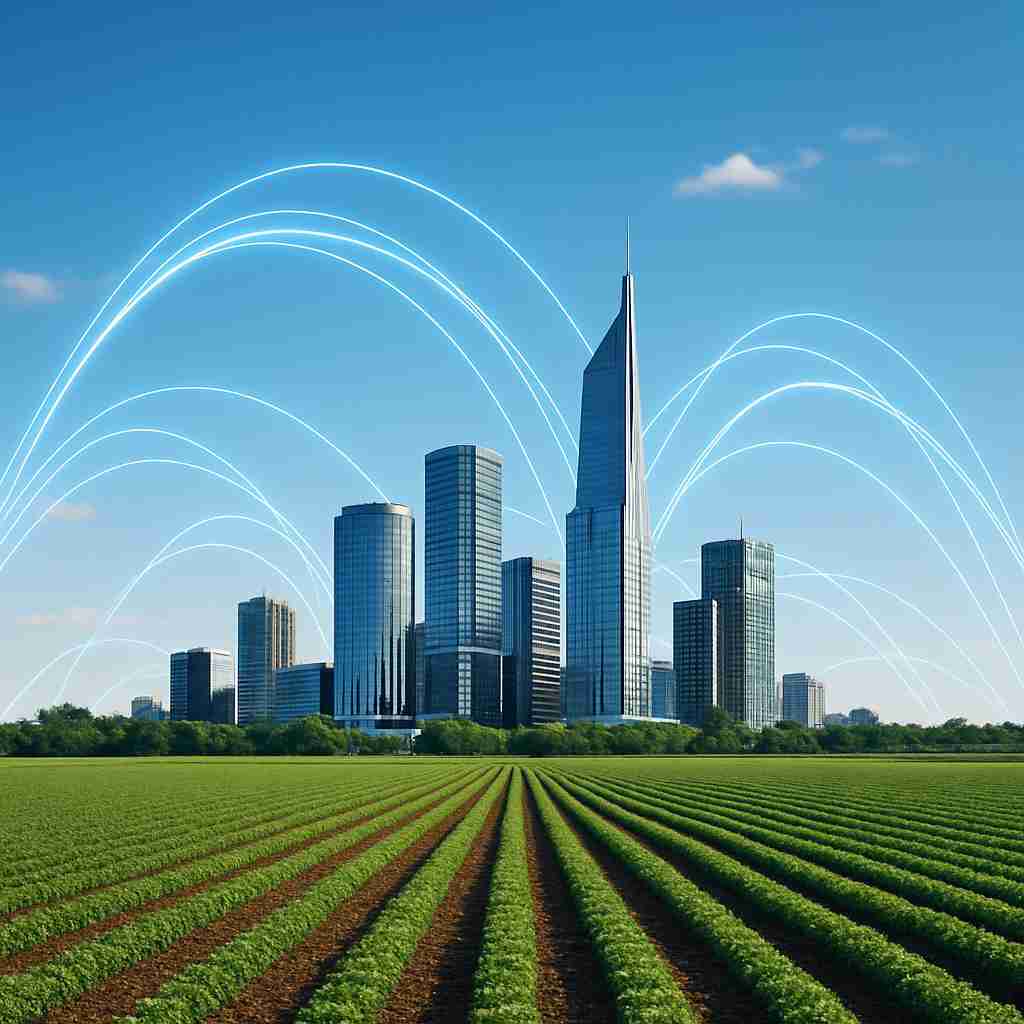

Within the changing realm of the Internet of Things (IoT), LPWAN and LoRaWAN stand as essential technologies, offering wide-area IoT communication that connects devices across vast distances with very low energy consumption. These systems facilitate uninterrupted Internet of Things device connectivity for applications spanning diverse fields such as smart farming Internet of Things, logistics, and intelligent urban IoT systems.
Understanding LoRaWAN and Its Components
LoRaWAN represents a pinnacle of innovation, expanding LoRa communication into a resilient network framework. Utilizing license-exempt radio frequency bands, it facilitates effortless data transmission across vast distances. Functioning within sub-gigahertz frequency ranges—such as 868 MHz in Europe and 915 MHz in North America—this technology ensures wide cross-border compatibility and easy accessibility. By operating in these bands, it avoids the expense of spectrum licensing, providing an economical alternative for businesses and local governments alike.
Key to the ecosystem is the LoRa Alliance, which standardizes LoRaWAN protocols to guarantee consistent quality and seamless interoperability among varied devices. This consortium brings together market frontrunners to promote worldwide adoption and encourage breakthroughs across IoT use cases. From intelligent farming IoT that monitors soil conditions with sensors to LoRa communication powering smart urban connectivity solutions enhancing city infrastructure, LoRaWAN extends the reach of the Internet of Things. It showcases human creativity by linking distant sensors in vineyards to urban planners who require instantaneous data. This adaptable technology highlights how low power long range networks can transform device interaction with minimal environmental footprint, boosting efficiency in our increasingly interconnected society.
The Essentials of Low-Power Wide-Area Networks
Low-power wide-area networks (LPWAN) have become fundamental for seamless long-range IoT connectivity, covering extensive distances while using minimal energy. These networks are built to send small data packets across large regions, frequently spanning kilometers. By employing low bit rates, devices like sensors and actuators can operate in the field for years without a battery replacement. In the IoT ecosystem, LPWANs play a vital role by enabling the installation of countless devices in remote or difficult-to-access areas.
The flexibility of LPWAN is enhanced by its range of standards. Proprietary protocols such as Sigfox provide ultra-narrowband communication, emphasizing simplicity and affordability, which is perfect for scenarios like asset tracking where owning the network is advantageous. Meanwhile, open standards like Weightless address a variety of use cases—from environmental surveillance to smart agriculture IoT—with features like frequency hopping that improve interference resistance. Additionally, LoRa communication, a crucial element of LPWAN, offers a scalable and adaptable network suitable for both public and private uses. Tailored to meet diverse IoT demands, each LPWAN protocol specification guarantees dependable and energy-conscious connectivity designed to satisfy the requirements of its domain.
Integrating IoT Connectivity with LPWAN Technologies
Enhancing IoT solutions’ functionality and range is achieved by merging LoRa communication with LPWAN technologies. These energy-efficient wide area networks support IoT devices to function across vast regions while ensuring minimal power consumption, which extends battery lifespan and streamlines data transfer. For example, utility companies leverage LoRa communication in smart metering to remotely track resource consumption, reducing the need for manual readings and facilitating immediate data analysis. This approach ultimately promotes efficient resource management and cost reduction.
In the field of agriculture, LPWAN enables continuous crop monitoring using intelligent farming sensors that provide data on soil moisture and nutrient conditions, empowering farmers to make educated decisions without being physically present. This guarantees optimal cultivation conditions while saving water and other resources. Another area where LPWAN excels is logistics, delivering robust connectivity across broad supply chains. Such real-time shipment tracking helps improve route efficiency and decrease losses, boosting overall operational effectiveness. By customizing these networks to meet industry-specific requirements, LPWAN technologies are transforming connectivity models, driving innovation, and broadening IoT’s application scope.
Long-Range Communication: Applications and Case Studies
LoRa communication is prominent in the Internet of Things domain for providing extended-range IoT connectivity with minimal power usage. Its distinctive capabilities benefit numerous sectors. In isolated farming regions, LoRa communication supports smart agriculture IoT by enabling monitoring tools that deliver up-to-date information about weather, soil status, and crop vitality. This data lets farmers fine-tune irrigation and boost harvests while conserving resources. Moreover, urban IoT infrastructure greatly profits from implementing LoRa in smart urban connectivity solutions. Devices track noise, air pollution, and streetlight functionality, helping local governments improve quality of life and reduce expenses.
Notably, some Spanish cities utilize LoRa-based networks to manage parking availability, which aids in smoother traffic and lowers pollution as motorists locate spots more quickly. Similarly, in supply chain operations, LoRaWAN deployments in tracking hardware grant vital real-time shipment tracking, enhancing efficiency and deterring theft. These practical examples demonstrate the versatility of LoRa and LPWAN technologies, offering crucial data insights and inspiring innovation across industries. By tackling distinct issues, these systems boost operational productivity and promote data-driven strategies.
Future Trends in LPWAN and IoT Technologies
Looking forward, the horizon for Low Power Wide Area Networks (LPWAN) and IoT is filled with promising possibilities. As we adopt upcoming advances in technology and expanding infrastructure needs, notable progress in LPWAN protocol specifications could emerge. These enhancements aim to overcome existing hurdles like limited data transmission speeds and interoperability challenges.
One exciting prospect is improving data throughput, which would facilitate smoother Internet of Things device connectivity. Enhanced modulation methods alongside adaptive algorithms might boost the transfer rates, making complex data tasks more efficient. Furthermore, with increasing emphasis on worldwide compatibility, there will likely be moves towards establishing more standardized protocols across diverse regions and platforms to simplify global rollouts.
Technologies such as 5G are poised to complement LPWAN, delivering hybrid connection options that balance high bandwidth demands with energy-efficient operation in simpler scenarios. Coupled with progress in edge data processing in IoT networks, connected devices can gain intelligence and responsiveness by analyzing information nearer to the source, thereby minimizing delays.
For LoRa communication, technological progress is set to enable innovative uses in smart urban LoRa solutions and digital agriculture IoT solutions. Leveraging these advancements, fresh opportunities will arise for LoRa communication deployments, fostering more efficient and integrated solutions.
Conclusions
LoRaWAN and LPWAN technologies are revolutionizing wide-area IoT communication by providing efficient, energy-saving Internet of Things systems capable of long-distance communication. Their wide-ranging adoption, spanning sectors from connected agriculture technology to city-wide IoT deployment, highlights their adaptability and critical role. As innovations continue, these networks are expected to evolve further, boosting their ability to support the growing variety of IoT device connectivity options and fostering future advances in technology.