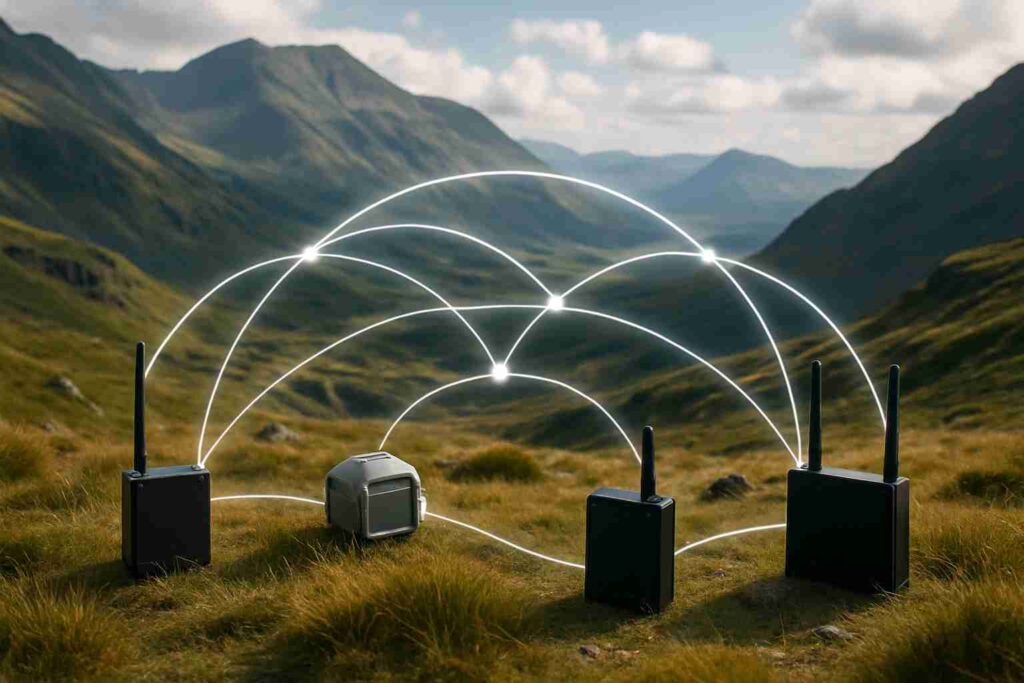

The Power and Reach of LoRa Technology
LoRa (Long Range) technology represents a groundbreaking advancement in remote wireless communication systems, delivering energy-efficient wide-area network technology that surpasses traditional connectivity methods. Its main strength is the capability to sustain long-distance communication while consuming very little power, making it an ideal solution for sectors such as precision agriculture connectivity, industrial surveillance, and asset monitoring. Initially created by Cycleo, LoRa utilizes unique spread spectrum modulation, which enables signals to effectively traverse urban settings and cover expansive rural areas. This impressive functionality leverages sub-1 GHz wireless communication bands, including 868 MHz in Europe and 915 MHz in North America, to maximize signal range while complying with local regulations.
Within the rapidly expanding Internet of Things (IoT) landscape, LoRa plays a vital role. LoRa mesh radios establish dependable frameworks that support LoRa mesh connectivity protocols, ensuring fault-tolerant communication even across difficult terrains. With the increasing need for seamless, standalone wireless communication, devices like LoRa mesh radios provide exceptional adaptability and scalability. From bolstering decentralization to delivering robust, cost-effective solutions, LoRa constantly pushes boundaries, guaranteeing that even the most isolated regions maintain their link to the worldwide digital network.
Decentralized Mesh Networks: Concepts and Advantages
Distributed mesh networks are exceptional in building robust and scalable communication infrastructures by linking nodes dynamically without a hierarchical setup. Moving away from conventional network designs, this method removes single failure points while strengthening system durability. In a mesh setup, nodes such as LoRa mesh radios interact directly, creating several routes for data forwarding that greatly enhance resilient communication.
The adaptability of these autonomous mesh networks stems from their self-organizing capabilities, enabling automatic reconfiguration when a node goes down. This feature proves invaluable in remote wireless communication systems or wireless network access in isolated locations where regular upkeep is impractical. Methods such as flooding combined with sophisticated wireless mesh routing algorithms ensure smooth data flow, maintaining continuous connectivity even if some nodes disconnect.
Light on maintenance and highly adaptive, these decentralized wireless networks fit a variety of uses—from ecological surveillance systems to crisis communication technology. By adopting distributed mesh connectivity, devices like LoRa mesh radios drive dependable and effective standalone communication platforms, becoming crucial assets in tackling today’s connectivity challenges. Harnessing these advancements provides users with fault-resistant communication networks that operate well under demanding conditions, highlighting the critical role of decentralization in modern communication frameworks.
Harnessing LoRa for Off-Grid Communications
Utilizing LoRa technology for autonomous wireless communication opens the door to a realm where connectivity doesn’t depend on typical infrastructure. In disaster-hit or isolated locations, conventional networks often fail, but LoRa mesh radios provide a resilient alternative. Their ability to link low-power extended-coverage transceivers through difficult landscapes makes them critical for particular uses. For example, in intelligent farming networks, sensors connected by LoRa systems track soil moisture, enhancing irrigation efficiency across large agricultural areas. Likewise, utility systems gain from LoRa, with distributed setups monitoring infrastructure such as pipelines across broad rural regions. The broad reach of LoRa mesh radios effectively supports these tasks even in challenging geography. During crises, fast setup of LoRa networks enables smooth communication among disaster response teams, highlighting its value in urgent situations. Thanks to minimal power requirements, LoRa networks not only extend battery lifespan in devices but also promote sustainable, energy-efficient IoT connectivity. By embracing these cutting-edge technologies, remote regions secure a dependable communication framework, improving productivity in various fields.
Exploring Meshtastic and MeshCore Platforms
Meshtastic and MeshCore mark groundbreaking advances in LoRa-based mesh networking frameworks, each providing distinct approaches to building resilient, autonomous wireless communication networks. Users benefit from these platforms by staying connected without relying on conventional internet services, a feature crucial for isolated regions and crisis situations. LoRa mesh radios, essential components of these solutions, enable long-distance messaging and data transfer by utilizing their energy-efficient wide-area radio capabilities.
Focusing on distributed mesh networks, Meshtastic spreads messages effectively throughout the entire system, guaranteeing seamless data flow free from dependence on a single central point. This model excels in volatile scenarios like natural calamities or outdoor excursions, where each node bolsters overall network resilience instead of representing a vulnerability.
Conversely, MeshCore employs structured routing to deliver organized and dependable communication paths, boosting message precision and reliability when accuracy is critical.
These platforms find practical uses ranging from wilderness trekking to emergency response missions. Meshtastic offers adaptability, whereas MeshCore brings consistency to the table. Despite challenges such as limited data throughput and node reach, ongoing progress in LoRa mesh radios keeps these technologies robust and affordable. Their increasing adoption signals a shift toward more affordable, accessible communication technologies with lasting benefits.
Future Prospects: Low-Power Wireless Communication
In the swiftly advancing sphere of wireless innovations, LoRa mesh radios are establishing a distinctive presence. These energy-saving wide-area radios, capable of enabling extensive self-organizing mesh networks, mark a transformative evolution in IoT interactions. Looking ahead, their incorporation into autonomous systems promises a future where devices and machines communicate effortlessly across large expanses without relying on centralized infrastructure. Picture sensor networks spreading across forests, effortlessly gathering environmental data, all powered by LoRa mesh radios that require very little energy.
Continuous technological progress is refining these networks. Encryption methods grow stronger, guaranteeing secure data transfers. Simultaneously, multi-hop network routing, essential for effective communication within large distributed mesh networks, continues to advance to support greater scalability. The hardware is also evolving—becoming more energy-conscious while extending communication range.
Both organizations and communities stand to benefit considerably from such technology. When correctly deployed, LoRa mesh radios provide sustainable, remote communication systems that are cost-efficient and robust, opening doors for innovative applications and environmentally mindful connectivity options.
Conclusions
Protocols such as Meshtastic and MeshCore, along with LoRa mesh communication standards, are essential for energy-efficient wide-area communication, delivering unmatched wireless network access in isolated locations. By grasping their operations and use cases, stakeholders can harness these tools to establish robust networks, propelling IoT and emergency response communication platforms forward. These advancements shape the horizon of distributed mesh connectivity, ensuring scalable and effective communication across various terrains.