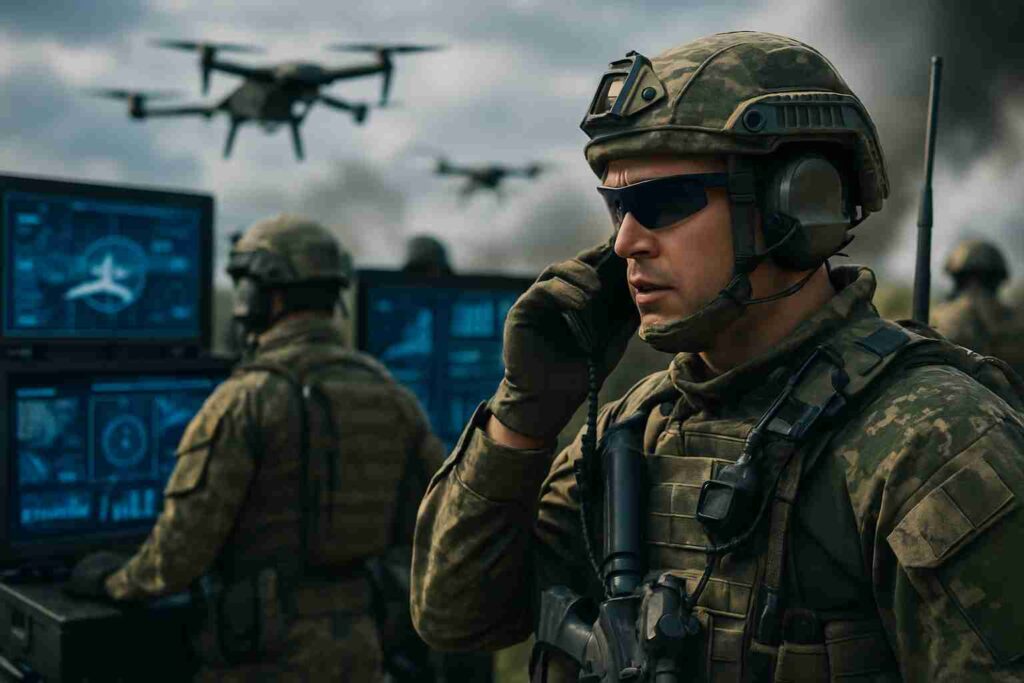

In the constantly changing realm of defense, communication that is effective holds immense importance. Encompassing a variety of technologies and systems, military communication aims to guarantee the protected defense communication networks necessary for the safe and efficient flow of information. This article delves into key elements such as strategic communication systems, warzone communication infrastructure, and state-of-the-art command and control systems, underscoring their vital significance within contemporary defense strategies.
The Evolution of Military Communication Systems
Tracing the dynamic journey of military communication systems reveals a history evolving from basic signals to intricate networks. Once, simple techniques such as flag signaling, semaphore, and homing pigeons were the primary means, providing limited yet essential communication on the battlefield. The telegraph’s invention marked a revolutionary leap, enabling rapid long-distance message transmission for the first time. Eventually, radio communication came into play, permitting real-time voice exchanges and greatly improving unit coordination.
The move from analogue to digital technology was a crucial step in the military communications development. This change was fueled by demands for faster, more dependable, and higher-capacity data processing. Digital platforms introduced encrypted communication, enhancing security and reducing vulnerability to interception. Furthermore, the adoption of satellite telecom infrastructure pushed boundaries beyond ground-based limits, granting worldwide coverage vital for contemporary military missions.
The emergence of internet-driven frameworks has since reshaped tactical communications, delivering robust networks capable of handling data-intensive tasks and the instant exchange of strategic intelligence. These strides in tactical communications ensure armed forces remain quick and effective within today’s complex operational landscapes.
Secure Communication Systems
Confidential military signaling systems play a vital role in protecting military missions by blocking unauthorized access and maintaining the integrity of information. Using defense cryptography solutions, they convert sensitive information into an unreadable format for anyone lacking the correct decryption keys. Among these, the Advanced Encryption Standard (AES) continues to be a reliable technique due to its strong algorithm, while RSA is commonly utilized for secure military data exchange. Cryptographic protocols such as Transport Layer Security (TLS) and Secure/Multipurpose Internet Mail Extensions (S/MIME) provide secure channels across networks, enabling encrypted communication streams resistant to interception.
Establishing protected armed forces communication infrastructure is critical, particularly in tactical communications, to prevent enemy surveillance. Military communication systems often deploy Virtual Private Networks (VPNs) alongside Intrusion Detection Systems (IDS) to identify and stop illicit access attempts.
A prominent example demonstrating the importance of encrypted defense communication networks in military success is the 2011 mission that resulted in Osama bin Laden’s apprehension. In this operation, secured satellite link ensured confidentiality and operational accuracy. Such cases highlight the essential role of robust military communication security in contemporary warfare, perfectly meeting the demands of tactical communications for prompt and dependable information exchange.
Tactical Communication Solutions for the Modern Battlefield
In the field of tactical communications, the technology’s effectiveness can be just as critical as the strategy itself. These strategic communication systems guarantee a seamless flow of live combat information transfer among units, boosting battlefield situational awareness and supporting rapid decision-making amid the uncertainty of modern warfare. Military forces leverage cutting-edge military communication technology to instantly share essential data, allowing them to respond flexibly to evolving combat scenarios.
Connectivity in this domain is supported by satellite communication networks, mobile battlefield communication solutions, and sturdy network infrastructures, which provide dependable channels for data even under harsh conditions. Designed inherently to withstand potential interruptions or environmental obstacles, these networks ensure coordination remains uninterrupted when it is most crucial.
The devices employed in tactical communications are built with adaptability in mind, frequently featuring modular combat communication tools that facilitate quick upgrades and reconfigurations tailored to varying mission demands. This adaptability is vital as it allows for the swift assimilation of emerging technologies while preserving consistent functionality. Consequently, these secure armed services communication solutions strengthen military missions with a resilient foundation, promoting enhanced connectivity and operational effectiveness.
Enhancing Battlefield Connectivity
Technological progress in tactical communication systems has transformed the way military units connect and coordinate. Now, modern military operations depend on seamless and resilient communication frameworks that integrate effortlessly across various units and platforms. Mobile and satellite telecom infrastructure play a crucial role by facilitating rapid, protected defense communication networks that ensure swift and reliable data transfers. These channels enable diverse military branches to communicate instantly, keeping ground forces linked continuously with command centers and other critical assets.
New solutions have been developed to address traditional obstacles like difficult terrain and harsh weather conditions. Designed for durability, today’s systems guarantee uninterrupted connectivity regardless of environmental challenges. Innovations in defense satellite communication systems maintain dependable links even in isolated locations, while military mobile communication networks offer agile, adaptive networks suited for fluctuating combat zones. Such advancements effectively counter geographical barriers and enhance the effectiveness of tactical communications within operational theaters.
By merging mobile and satellite communication solutions, armed forces sustain critical operational advantages. This elevated connectivity not only bolsters strategic decision-making but also strengthens the capability to react swiftly and flexibly to rapidly evolving battlefield conditions.
Command and Control Systems in Military Operations
Advanced command and control systems play a crucial role in implementing military tactics, acting as the central hub for today’s operations. These solutions facilitate smooth coordination and planning, giving commanders a continuous overview of the combat zone. By merging information from multiple sources, leaders achieve thorough situational awareness, enabling prompt and well-informed decisions.
Recent strides in technology have revolutionized C2 technology, boosting both connectivity and pace. Transitioning to electronic defense communication systems allows real-time tactical data exchange, offering commanders accurate, timely intelligence. This digital shift not only accelerates decision-making but also enhances mission supervision. Incorporating emerging innovations such as AI and machine learning further sharpens predictive capabilities and proactive measures, increasing responsiveness in dynamic settings—though this also requires strong military network protection against cyber risks.
Simultaneously, distributed tactical communications guarantee uninterrupted data flow even across difficult terrain. Such advancements eliminate conventional chokepoints, ensuring all decision-makers—from frontline soldiers to high-level commanders—function with harmonized insight and precision, prepared to swiftly adjust and react under demanding conditions.
Conclusions
To meet the needs of modern warfare, military communications have undergone substantial transformation. Ensuring decisive and effective missions largely depends on robust military communication solutions, strategic communication systems, and reliable connectivity. As technology progresses, integrating these platforms will become increasingly fluid and essential, ultimately molding the future landscape of military strategy and operational success.